

Within the field of education, researchers have tended to focus on what is taught or how it is delivered rather than where teaching and learning takes place. In contrast, environmental psychologists have long recognised that the physical learning environment plays an active role in the educational process [1] and studies have shown the importance of a range of environmental features such as indoor nature elements [2], noise, [3] air quality [4] and levels of stimulation [5].
Whilst there has been a lack of research in general on the physical learning environment, the majority of research that has been conducted, has focused on the effect of the physical learning environment on students and student-related outcomes [6–9]. Whilst this is both understandable and justifiable, it fails to recognise another important group of stakeholders in the education system, namely, teachers. The aim of this paper is to address the lack of research on the physical learning environment from the perspective of teachers by exploring how they perceive their school environment and how these perceptions are related to important work-related outcomes.
Research focusing on teachers’ interaction with the physical learning environment has demonstrated the relationship between pedagogical practice and the design of learning spaces [10] and that classroom layout and furniture can support group work and collaborative learning [11]. Shapiro et al. [12] focused on how teachers move through and interact with classroom spaces during teaching and proposed that teaching should be understood as a spatial practice in which teacher movement and classroom layout shape classroom interactions and responsive instruction.
In relation to work environments, Oyedeji et al. [13] highlight that a sense of control is a general concern that applies to all physical aspects of the workplace. Within a school context, the role of the teacher often requires the ability to control, regulate and manipulate their classroom and it is therefore highly likely that having a degree of control over aspects of the learning environment such as being able to regulate ambient variables and having an environment that provides functional opportunities such as space and moveable furniture to modify the classroom layout, are particularly important.
A study conducted in Denmark focused on teachers’ experience of classroom acoustics and found that noise exposure (and the lack of control over this) was significantly associated with a number of outcomes such as low job satisfaction, tiredness and a lack of motivation [14]. Dalinger et al. [15] examined teachers’ perceptions of the physical environment within their classroom and found that aspects such as layout, furniture lighting and acoustics were related to teacher self-efficacy i.e. their personal belief about their ability to plan, organize, and execute actions that bring about desired learning outcomes.
It is also worth noting the range of different work-related teacher outcomes that the environment might impact on. For example, a recent literature review on teacher wellbeing identified that the physical environment along with organisational and social aspects of the workplace are important for teacher well-being, and that this was a key factor affecting teacher retention and student performance [16].
Of these different work-related outcomes, one of the most studied is job satisfaction and research has recognised that teacher job satisfaction is a multi-faceted phenomenon [17]. One facet of teacher job satisfaction that is relevant for the current study is the quality of the physical learning environment, and recent work has highlighted how physical and psychological characteristics of the work environment such as classroom control [18], and infrastructure and technical equipment [19], can have an impact on teachers’ job satisfaction. Given the importance of teacher job satisfaction for retention and wellbeing [20], and that the OECD [21] emphasises that increasing teacher satisfaction is a prerequisite for the operation of sustainable education systems, there is a need for further research to investigate the role of the physical school environment in relation to teacher job satisfaction.
While researchers have focused on job satisfaction, we would suggest that teachers’ self-efficacy should also be considered. Levels of self-efficacy in teachers has been related to teaching quality [22], classroom climate and classroom management strategies [23], and job satisfaction [20, 24]. A recent systematic review and meta-analyses by Zhang et al. [25] found compelling evidence that higher levels of teacher self-efficacy enhanced teachers’ instructional practices, increased student motivation and achievement, and reduced teachers’ burnout and mental health challenges.
The preceding discussion has served to highlight the importance of the physical learning environment on the perceptions and behaviour of teachers. However, this research has primarily focused on the learning environment in terms of one specific environmental unit, namely, the classroom. We would argue that the work environment for teachers is more than just the classroom and that teachers interact with the whole-school environment on a daily basis. As such they are likely to be influenced by other aspects of the school environment such as staff social areas, circulation spaces, toilet facilities and even the general appearance of the school. Support for this perspective comes from a study by Edgerton et al. [26] in which the researchers conducted several focus groups with students and teachers in secondary schools in Scotland. The findings illustrated that when asked about their school, teachers highlighted the importance of a range of different areas of their school environment rather than taking a purely ‘classroom-based’ perspective. The data from the focus groups was then used to develop a survey tool, the Physical School Environment Questionnaire (PSEQ). The PSEQ measured users’ perceptions of their whole school environment as well as other variables such as ‘in-school behaviour’ and ‘self-perceptions’. Subsequent large-scale studies using the student version of the PSEQ has supported its validity as a means of measuring how students perceive their school environment [27], however, the psychometric qualities of the teacher version of the PSEQ have yet to be assessed.
In addition to focusing on the impact of the whole school environment on teachers, we add another strand of research in this area by developing an awareness of the dynamics of changing environments i.e. the impact of changing school environments is likely to be dependent on the characteristics of users and the nature of the actual environmental change. For example, Edgerton et al. [28] found that students’ and teachers’ perceptions of their new school environment were related to the degree of change in the school environment and that both groups had more positive perceptions of their school that was completely re-built compared with those whose school had undergone a major refurbishment. The study also highlighted that perceptions of the new school were not universally positive (particularly from the teachers’ perspective) and that we should be cautious about assuming that ‘new means better’. One weakness of this study that the researchers recognised was that the data on the ‘old’ school environments was retrospective in nature and was based on a limited, ad hoc measure of the physical school environment.
In summarising the above studies, we would argue that there is a need for additional research to evaluate the effect of the physical school environment on teachers. In particular, there is a need to evaluate the usefulness of ad hoc tools to assess key variables. Whilst several studies have reported on the development of tools to measure variables, they have often not reported on the robustness of scales within these tools. In addition, much of the research in the field has focused on an individual school, which limits the ability to generalise the findings from these samples.
A final limitation in this area relates to the paucity of research that seeks to address how changes to school estates are experienced by those who use them the most (i.e. students and teachers). In the present study our focus is on teachers and whether changes to the school environment may or may not result in changes to behaviour that extend beyond any ‘novelty effect’. If we acknowledge that the effect of changes to any environment may result in behavioural changes that may or may not endure, we would normally seek to answer such questions through the use of longitudinal designs. However, in studies that take place in the ‘real world’ longitudinal methodologies are rarely employed, in part, because of cost but also because of practical and methodological challenges. For example, collecting data from the same teachers over time might often not be possible as teachers may have left the school by the time of later data collection phases. A further challenge is that even if the same teachers remained in the same school for the period of the study the individuals will have ‘changed’ in several ways. They will have developed in terms of experience and may have undertaken professional development in the time of the study. As such any changes to their behaviour could be attributed to factors that have nothing to do with changes to the physical environment. Finally, longitudinal studies need to be cognizant of changes in other factors during the time of the study that may provide different explanations for the findings.
In this study we tackle these design challenges by adopting a novel methodology that allows us to address the key question of whether changes in behaviour, resulting from environmental change, are simply examples of a ‘novelty effect’. We do this by comparing comparable cohorts of teachers over a seven-year period who worked within a set of schools that experienced significant environmental change. The study adopts a large-scale survey methodology, and we were able to obtain information on the degree of change in other key (non-environmental) variables during this time frame. By adopting this methodological approach, we can assess teachers’ perceptions of their school environment and important outcomes and whether these are associated with changes to the school environment.
This study will focus on the secondary school estate within one Local Authority area in Scotland during the period of a significant re-building programme. As such the school estate was in various stages of development and we focused on three contrasting stages, namely: the original school estate, the new school estate (one year after it was completed) and the new school estate four years after it had been completed. The aims of the study are twofold; in the first instance we want to explore how the different versions of the school estate are perceived by teachers and then secondly, we want to identify how the different versions of the school estate impact on a range of educational outcomes. These aims are addressed through the following hypotheses:
In addition, the study assesses the reliability of the scales of the survey tool that measure teachers’ ‘in-school’ behaviour and feelings about themselves.
The data for this paper is drawn from a larger study involving students and teachers in five schools in a Local Authority in Central Scotland. Some of this research has been published [7] and the Methodology is consistent with the previously published work.
The Authority in question was undertaking a £100million secondary school rebuilding. In Scotland secondary schools accommodate students between 12-17 years of age and this project focused on five schools. The need to comply with new building regulations provided the motivation to rebuild these schools while drawing on existing success within the schools by enhancing the learning environments. Improvements that were to be included in the new schools were: wider corridors with natural lighting; toilets located at the “hub” of each school (i.e., social area); “break out” areas (for one to one teaching with students); all subjects (except physical education) to be delivered in one, centralised main building; all schools to have indoor and outdoor social areas; provision of student lockers for storage and a greater amount of outdoor provision.
This paper focuses on the data that was collected across three different ‘versions’ of the schools:
For each of the three versions of the school estate outlined above, data was aggregated across all five schools.
Data was collected using the teacher version of the PSEQ1. This questionnaire consists of scales that were developed by the authors to measure teachers’ perceptions of their school environment and their ‘in-school behaviour’, and several existing standardised scales to measure other, relevant work-related outcomes. The PSEQ consisted of three sections.
The first section measured key aspects of the physical school environment and this was created based on information obtained from two focus groups with teachers in two schools involved in the school re-building programme and a ‘shadowing’ exercise where the researchers followed and observed several teachers in their normal, day-to-day work environment within one of the schools [27]. There were sixty-six items in total relating to the school environment and teachers were required to rate these on a five-point Likert scale from ‘very poor’ through to ‘very good’. These items were grouped into nine distinct areas of the physical school environment however, two of these areas related to the sports facilities (indoor and outdoor) and since the majority of teachers had little experience with these areas, these were removed. This resulted in fifty-three items relating to the school environment grouped into seven distinct areas: attractiveness of the outside of the building; staff common rooms; staff toilets, ‘their’ classroom; corridors and stairs; staff bases and security. The items showed excellent internal reliability (Cronbach’s alpha = 0.959) and for the purpose of this study, we produced a ‘Global School Environment’ (GSE) score by summing the average score across all fifty-three items.
The second section measured several important ‘in-school behaviours’ and again this was based on information obtained from the series of focus groups and shadowing exercise. Two categories of behaviour were identified, and teachers were asked to rate how often they performed a range of behaviours on a four-point scale ranging from ‘never’ through to ‘always’. The two categories of ‘in-school behaviour’ were Environmental Control (6 items) and Negative Environmental Perceptions (8 items) and Cronbach alpha coefficients showed that these subscales had acceptable levels of reliability: Environmental Control (0.680), and Negative Environmental Perceptions (0.722).
The third section of the questionnaire measured teachers’ feelings about themselves in general (Global Self-esteem) and within their job at their school (Work Self-perception). Global Self-esteem was measured using Rosenberg’s Global Self-Esteem Scale; this consists of ten statements and teachers were asked to rate how much they agreed or disagreed with these statements on a four-point scale ranging from ‘strongly disagree’ through to ‘strongly agree’ [29]. As expected, there was good reliability for this scale (0.888). Work Self-perception consisted of six statements generated by the researchers and teachers again had to rate how much they agreed or disagreed with these statements on a four-point scale ranging from ‘strongly disagree’ through to ‘strongly agree’. Reliability analysis for the Work Self-perception scale showed that there were no weak items and a Cronbach’s alpha of 0.861.
The final section of the questionnaire measured teachers’ Job Satisfaction i.e. how satisfying and interesting they found their job at this school. This was assessed using a standardised global measure of job satisfaction consisting of eighteen statements and teachers were asked to rate how much they agreed or disagreed with these statements on a five-point scale ranging from ‘strongly disagree through `undecided’ to ‘strongly agree’ [30]. As expected for a standardised scale such as this, there was good reliability (0.886).
In summary the results of these analyses support the robustness of the survey tool in terms of its reliability.
1 Since the full survey included copyrighted scales, we have included a copy of the PSEQ in the Appendix without these scales. ↩
The study collected data from teachers in five schools that were part of the rebuilding programme. After the Local Authority and the University Ethics Committee had approved the study, the questionnaires were administered in each school through the internal mail system. Teachers could then complete these in their own time and post them into a locked ‘post box’ within the staff common room.
Data was collected across the three ‘versions’ of the schools identified above, and the response rates were: ‘Original’ school estate (N=123, 48%), ‘New’ school estate (N=87, 33%) and ‘New+’ school estate (N=142, 41%); giving an overall response rate of 41%. Overall, 70% of the sample was female, 48% were over 46 years of age and 50% had more than 15 years teaching experience.
In total, across all five schools and all different versions of the school estate, 352 teachers completed the questionnaire. However, since the cohort of teachers were not identical across each version of the school estate, all data in this study will be analysed as if it was independent, across different versions of the school estate. In summary therefore, the data is based on a comparison across comparable cohorts of teachers at three different points in time. Our argument (based on data provided by the Local Authority) is that the different cohorts are comparable because of the consistency across the old and new versions of the schools in both student characteristics (school rolls and socio-demographic background) and teacher characteristics (same Head Teacher for each school, total number of teachers in each school, and teacher turnover). In addition, whilst Scotland has a national curriculum called the Curriculum for Excellence (CfE), the responsibility for how this is delivered lies with Local Authorities and therefore any variation in the delivery of the curriculum is likely to occur between and not within, Local Authorities. In short, the major change in these schools over the duration of the study, is the building of the new versions of the school estate.
The results will focus on both statistical significance and effect sizes; using the categorisation system by Cohen [31], we have categorised the effect sizes as: small = 0.1-0.25, moderate = 0.26-0.45 and large > 0.45.
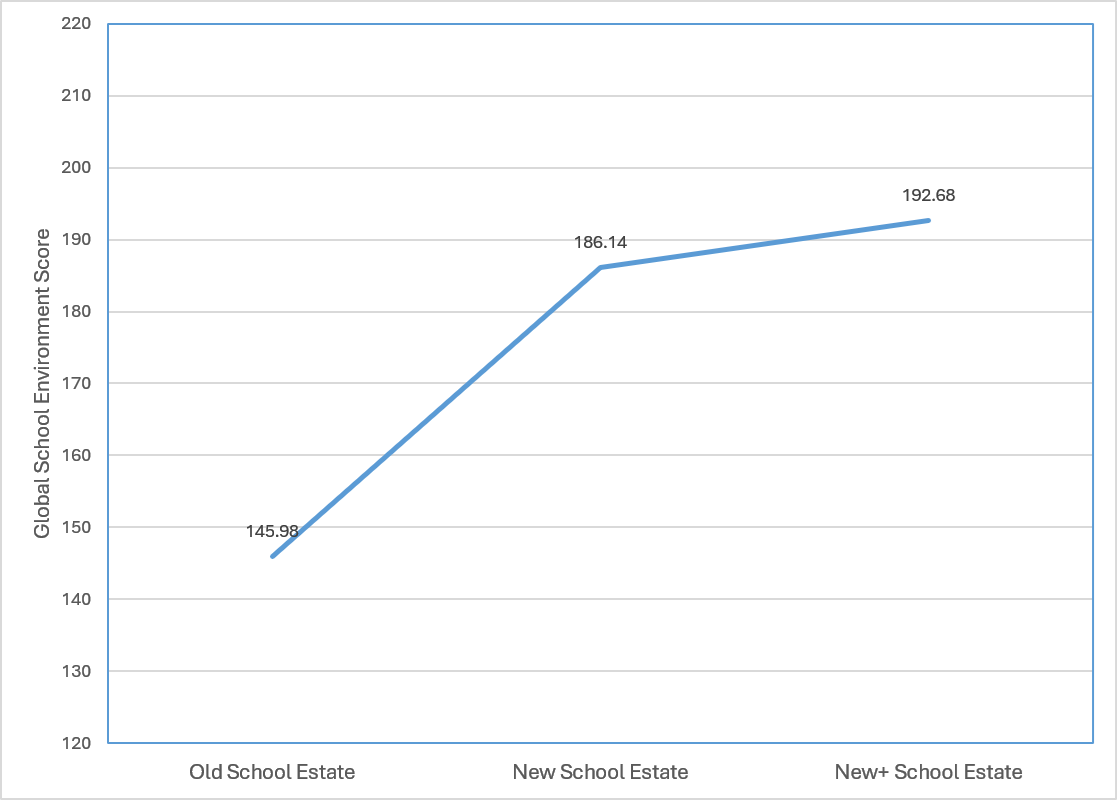
Figure 1 displays the mean Global School Environment (GSE) scores across the three versions of the school estate.
For the GSE scores, a one-way ANOVA showed a significant difference by school estate version with a large effect size (F(2,347)=82.00, p<0.001, effect size (r)=0.57). Individual contrast tests showed that the increase in mean score of 40.2 from the ‘Original’ school estate to the ‘New’ school estate was significant however, the increase in mean score of 6.54 from the ‘New’ school estate to the ‘New+’ school estate was not significant (p=0.12).
These results clearly indicate that the new versions of the schools were perceived more positively by teachers and that these positive perceptions persisted over time (i.e. 46 months after the new schools had been completed). These results therefore support the first hypothesis.
Having found that teachers’ perceptions of the new versions of the school estate are significantly better than the original version, it is important to understand the reasons behind this improvement. To do this we can utilise two additional pieces of data: (i) in addition to the GSE scores, we can also look at teachers’ perceptions of different aspects of the school environment, and (ii) teachers’ responses to the qualitative section of the PSEQ that asked them to list the three best and worst features of their school environment.
Whilst the quantitative data on the different aspects of the physical environment demonstrated some between-school variation, there was also substantial consensus on the aspects that showed the greatest improvement. Across all schools, the aspects of the physical environment that showed the greatest improvement, were (in order): the outside of the building, the corridor and stairs and security. The aspects that showed the least improvement, were (in order): the staff common room and the staff toilet facilities. Overall, the highest rated aspect of the physical school environment across all schools was the outside of the building and the lowest rated was the staff toilet facilities.
The qualitative data from the survey, also demonstrated considerable consensus across the schools in terms of the amount of space in general (and teaching spaces in particular) being listed as the best aspect of the new schools. However, when it came to the worst aspect of the new schools there was more between-school variation with teachers in different schools highlighting aspects such as the staff toilets, car parking and ventilation/temperature. We will return to the reasons for these improvements in the discussion section.
For all work-related outcome variables, a series of one-way ANOVAs were conducted with school estate version as the factor. Table 1 summarises the results of these analyses for the school version factor across all five outcome variables.
| Work-related outcome variable | p-value | Effect size |
|---|---|---|
| Environmental Control | p<0.001 | 0.44 |
| Negative Environmental Perceptions | p<0.001 | 0.45 |
| Work Self-perception | p<0.001 | 0.25 |
| Global Self-esteem | n.s. | N/A |
| Job Satisfaction | p<0.004 | 0.18 |
The first set of work-related outcomes were the two ‘in-school behaviours’. For Environmental Control and Negative Work Perceptions, there was a significant difference by school estate version with a moderate effect size. Individual contrast tests showed that for both ‘in-school behaviours’, the improvement (increase for Environmental Control and decrease for Negative Environmental Perceptions) from the ‘Original’ version of the school estate to the ‘New’ version of the school estate was significant and that the improvement from the ‘New’ version of the school estate to the ‘New+’ version of the school estate was not significant.
The second set of work-related outcomes were Work Self-perception, Global Self-esteem and Job Satisfaction. For Work Self-Perception there was a significant difference by school estate version with a moderate effect size. Individual contrast tests showed that the increase from the ‘Original’ version of the school estate to the ‘New’ version of the school estate was significant but that the increase from the ‘New’ version of the school estate to the ‘New+’ version of the school estate was not significant. For Global Self-Esteem, there was no significant difference by school estate version. Finally, for Job Satisfaction, there was a significant difference by school estate version with a small effect size. Individual contrast tests showed that the increase from the ‘Original’ version of the school estate to the ‘New’ version of the school estate was significant but that the small decrease from the ‘New’ version of the school estate to the ‘New+’ version of the school estate was not significant.
The results can be summarised as follows.
A primary focus of this study has been to consider whether any identified changes ascribed to the new school estate endure beyond the period of a ‘novelty effect’. The findings on teachers’ perceptions of their school environments indicates that they give the highest ratings to the ‘New +’ version of their schools. Almost four years after the completion of the new schools, the responses from teachers highlight that these positive perceptions of the school had been maintained. In addition to showing that such responses cannot be explained by the novelty of a new school building, the general pattern of findings supports the first hypothesis i.e. teachers’ perceptions of the new school provision are significantly more positive than the original version. Furthermore, these more positive perceptions are a consequence of actual improvements to the physical environment and in particular, improvements to the outside of the building, the corridor and stairs, security and the amount of space in the new schools.
All the schools in this study were completely re-built, however, changes to the school environment were more substantial in some areas compared to others. For example, compared with the old school estate, the new schools were designed to be architecturally unique, with landscaped grounds, and wider corridors and circulation spaces with natural lighting and views to the outside. In contrast, classrooms, staff common rooms and staff toilet facilities in the new school estate were similar in size and arranged in the same way as the old school estate. It is noticeable that these aspects were absent from the teachers’ list of areas showing the greatest improvement. We would argue that one explanation for this is that the changes in these areas, compared to the original school, were limited and largely cosmetic in nature. This would suggest that the degree of change to the physical school environment was a more significant factor impacting on teachers’ perceptions. Finally, it is worth highlighting that the substantial changes to the corridors and circulation spaces along with one single, secure entrance to the school, may contribute to the large decrease in teachers’ concerns about security in the ‘New’ and New+’ versions. It is highly likely that the design of these areas in the new school estate reduced the potential for accidental infringements of personal space and seeing strangers within the school.
Our final concern was to explore the association between the school estate and several work-related outcomes. The latter focused on five outcome variables: two ‘in-school’ behaviours (Environmental Control and Negative Environmental Perceptions), two measures of teachers’ feelings about themselves (Work Self-Perception and Global Self-esteem) and a measure of Job Satisfaction. The results showed that the new schools were associated with significant changes in four of these teacher related outcomes. There was a moderate increase in teachers’ level of Environmental Control and Work Self-Perception, a moderate decrease in teachers’ negative perceptions of their school environment and, finally, a small increase in teachers Job Satisfaction. In contrast there was no significant difference between versions of the school estate for Global Self-Esteem. We will return to this later in this discussion. For all the significant findings it is notable that the effect that was evident in the ‘New’ school and was maintained in the ‘New+’’ version of the school estate. In general, these results offer support for the second set of hypotheses. The new versions of the school estate resulted in significant, positive improvements in four of the five teacher-related outcomes and where change did occur, it persisted into the ‘New+’ version of the school estate i.e. almost four years after these were completed. This allows us to question a ‘novelty effect’ explanation for our findings and to suggest that the results show a positive and consistent effect of the school environment on teachers, that is then maintained at the different points in our study.
The results demonstrate that teachers felt that they had more control over their environment in terms of being able to adjust aspects of their classroom or find spaces in the school to suit their needs. This is an important finding in relation to the new versions of the school estate if we consider the Behaviour Constraint Model within environmental psychology which proposes that when individuals perceive that they have less control over their environment, they are more likely to experience discomfort or negative affect [32]. Research within the workplace has shown that uncontrolled stimuli, arising from ambient conditions, spatial configurations, and aesthetics, negatively affect environmental perceptions and job satisfaction [13]. Within school environments research on physical openness (e.g. removal of walls) affords teachers flexibility of space, which helps them create new arrangements for teaching and learning [33].
Teachers also had fewer negative perceptions of the school environment. Whilst some of the scale items relating to this outcome were concerned with density levels in various spaces in the school, most of the items were concerned with security issues such as strangers being present in the school, avoiding unsafe areas and having personal belongings stolen. Although the reduction in these aspects might be partly associated with new policies on external visitors, they are more likely to be associated with design features such as enhanced boundaries, improved visual access in circulation and social spaces and more expansive circulation spaces with good quality lighting.
The new versions of the school estate had a positive impact on work self-perception but had no impact on global self-esteem. These results may be best understood by considering the distinction between domain specific and global self-esteem. [29] proposed that global self-esteem refers to an individual’s thoughts and feelings about themselves in general, and domain specific self-esteem refers to an individual’s evaluation of themselves within a specific domain. In our study, work self-perception is domain specific and measured aspects such as enjoyment, motivation and pride in the school and the job in general and it appears that these aspects are influenced by the quality of the built environment. However, since global self-esteem refers to an individual’s thoughts and feelings about themselves in general, it is likely to be affected by many factors out with the school or work context [34].
A final point to note in relation to the teacher-related outcomes was that the new versions of the school estate had a small, positive impact on job satisfaction. This finding is supported by other studies that have looked at the relationship between teachers’ job satisfaction and their work environment. For example, a study by [35] investigated the relationship between school climate and job satisfaction and found that the ‘resource adequacy’ component of school climate (which includes facilities, equipment and resources), positively influenced job satisfaction. Similarly, Dalinger et al. [15] showed that teachers’ perceptions of their classroom and the school building were related to self-efficacy and job satisfaction. Finally, several studies have also found that new or renovated schools had a positive impact on a variety of teacher-related educational outcomes including job satisfaction [36, 37].
The small but positive impact of the new versions of the school estate on job satisfaction are important when we consider the global prevalence of high attrition and turnover within the teaching profession [38]. Recent research suggests that the physical school environment is an important determinant of teacher job satisfaction which in turn impacts on retention [16, 33, 39]. These studies show that providing high-quality learning environments can enhance self-efficacy, morale and motivation in teachers and this may be one way of addressing issues to do with teacher retention.
As we noted in the introduction, carrying out research in ‘real world’ settings can create methodological challenges. It may also mean that our findings could be explained by other changes that have taken place in the wider environment, during this time. The most obvious of these changes in the context of the present study are changes in school policies, student demographics, teacher turnover, the curriculum and leadership within the schools. As part of this study, we liaised with the relevant Local Authority and the participating schools to request information on these aspects. Based on these discussions we can rule out changes in the student demographic, staff turnover, school leadership, curriculum delivery and school policies as potential explanations for our findings. All these aspects remained relatively constant throughout the study. Given the stability in these key aspects throughout the study, we would argue that this supports our interpretation of the findings. The variation in the results between the original and the new versions of the school environment are best explained by the changes to the school estate.
It could be argued that the teachers’ positive perceptions of the new schools could be explained by reference to the ‘Hawthorne Effect’. Some degree of caution is required in respect to this ‘effect’ as some researchers have questioned the usefulness of the term itself [40]. Such criticism revolves around the ways in which the term has been defined and interpreted by authors. In the context of this paper, we consider the ‘effect’ to be related to teachers modifying their behaviour in response to their awareness of being observed [41]. We would argue that two aspects of our findings would mitigate against explaining our findings as an example of a ‘Hawthorne Effect’. First, not all aspects of the new schools were perceived as being positive; for example, there was no change in teacher’s Global Self-Esteem between the original and new versions of the school estate. Second, the outcomes from our study were maintained in the ‘New+’ school estate, four years after completion. This contrasts with a ‘Hawthorne Effect’ where the positive effects are expected to be short lived.
It is also worth noting that within our study we adopted a ‘whole-school environment’ approach; this is reflected in the use of a ‘global’ school environment score that is based on a summative total of different areas of the school environment. We would argue that there is merit in this approach, but recognise that different schools of thought might advocate disaggregating the data into smaller units such as classrooms, circulation spaces, etc. We would therefore recommend that future research might examine the relative contribution of different areas of the school environment to teachers’ work-related outcomes; these could be non-classroom units such as staff bases, circulation spaces and social spaces.
A final potential limitation is that our study did not focus on the potential mediating role of teacher characteristics on the relationship between the school environment and work-related outcomes. It is possible that age, length of time as a teacher and experience with other school environments, could impact on the relationships that we found.
In conclusion, the findings of this study make two major contributions to our understanding in this area. First, by addressing limitations in previous studies, we have demonstrated that renewing the school estate has a positive impact on teachers across several work-related outcomes. This supports the view that we need to acknowledge and understand that changes to the physical environment have consequences for employees. The second contribution relates to the assumption that such findings can be ascribed to a ‘novelty’ or ‘new building’ effect. By comparing teachers’ responses across the three versions of the school, we can, with some confidence, argue that that the impact of the new environment should not be viewed as short-term outcome.
The implications of this study should be of note to policy makers and educationalists. Adopting a holistic view of the school environment, as we do in this study, demonstrates the relationship between this environment and a range of psychological outcomes for teachers. However, the study also draws attention to the need for further research in this area to develop our understanding of the interaction between educational environments, teaching practice and the aims of the curriculum.
All authors contributed equally to the conception, development, preparation, and revision of the manuscript. All authors have read and approved the final version of the manuscript.
This research received no external funding.
The authors declare no conflicts of interest.
The data supporting the findings of this study are available from the corresponding author upon reasonable request.